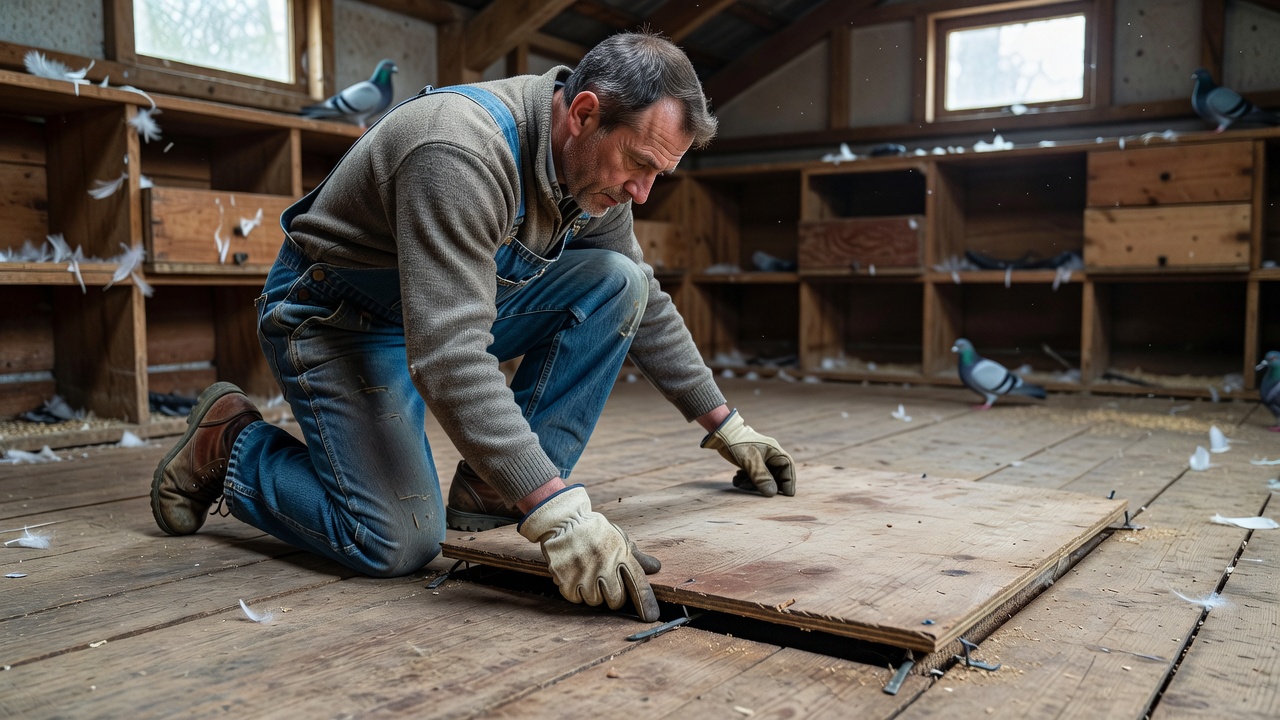
Choose an assembly you can keep dry, inspect closely and repair safely. A material’s label matters less than how its edges, fixings and hidden faces perform together.
Ask four questions of every surface
Can a bird stand on it comfortably? Can you remove soiling without damaging it? Can trapped moisture escape? Can a worn section be replaced without dismantling the loft? If any answer is unclear, investigate the product and detail before buying. “Weatherproof” does not mean safe for every bird-contact use.
Timber: workable, but detail the wet edges
Timber is easy to cut and repair, and it can suit framing, cladding and replaceable internal fittings. Its weaknesses are often concentrated at end grain, joints and places where water remains against another surface. Keep vulnerable edges away from standing water, detail roof drainage properly and leave access to inspect the lower wall and floor junction.
Choose timber appropriate to its exposure and structural role. Do not assume a preservative-treated product is suitable for pecking or prolonged bird contact. Ask the manufacturer about the intended use, treatment and curing requirements. Reclaimed wood needs particular scrutiny: unknown coatings, embedded fixings, rot and chemical contamination can outweigh any saving. Structural grading and member sizes belong with a qualified designer.
Sheet products: protect the complete panel
Exterior-rated plywood can provide a practical lining or floor component, but an exterior bond does not make every panel immune to water damage. Seal and protect edges as appropriate to the specified system, avoid exposed splinters and check whether cleaning will wear through the finish. Oriented strand board and other composite sheets vary by grade; rough, absorbent faces are difficult to clean effectively when left unprotected.
Plastic sheet and coated panels may wipe clean readily, yet joints, backing surfaces and fixings can still retain moisture. Some smooth sheets become slippery when wet, and some deform with temperature changes. Follow installation guidance for expansion and support. Compare a small sample after realistic cleaning and drying before committing to a whole interior.
Compare the assembly, not just the price
Common choices and the questions they raise
Material
Practical strength
Watch closely
Suitable timber
Repairable and easy to work
End grain, splinters, coatings and persistent damp
Exterior-rated plywood
Continuous, adaptable panels
Cut edges, delamination and worn finishes
Suitable coated sheet
Potentially easy to wipe clean
Grip, joints, scratching and trapped moisture
Concrete base
Durable when correctly designed
Damp control, drainage, hard surfaces and cracks
Metal mesh
Protection at selected openings
Sharp edges, corrosion, attachment and aperture size
Make safe footing the first floor requirement
A floor should remain stable, offer suitable grip and have no gaps or projections likely to injure feet. Smooth does not have to mean slippery. Test how the proposed surface behaves with a little moisture and how easily residues come away. Avoid creating a floor that requires aggressive scraping until sharp fragments or exposed fixings appear.
A solid cleanable surface can simplify inspection, while removable trays can make waste collection easier if they are light enough and genuinely accessible. Grated systems need specialist scrutiny of aperture size, support, foot comfort and cleaning beneath. Do not assume wire or a raised grid is appropriate for prolonged standing. Seek avian husbandry advice where a flooring choice may affect foot health.
Check the joint as carefully as the visible surface. Hidden damp and projecting screws are easy to miss.
Keep barriers secure without creating new hazards
Mesh selection depends on local predators, pests and the opening being protected. Both aperture and wire strength matter, along with secure attachment around the entire perimeter. Fold or cover cut edges so birds and keepers cannot contact sharp ends. Do not rely on a few light staples to secure a vulnerable barrier, and inspect for corrosion and loosening.
Fine screens may restrict airflow or clog with dust; include their effect in ventilation planning. Prevent access to damaged coatings or unsuitable metal components that birds could ingest. Where a product’s suitability is uncertain, obtain written information from its supplier rather than treating a general construction label as an animal-safety approval.
Choose finishes and cleaning methods together
Read the finish manufacturer’s technical and safety information, including preparation, application, curing and ventilation requirements. Keep birds away from work areas, fumes, wet coatings and dust. A surface that feels dry may not be fully cured. Do not describe a paint or sealant as universally “bird-safe” without evidence for the actual use.
Plan routine cleaning before coating anything. Check which detergents or disinfectants the finished assembly tolerates, and use products only as labelled. Removing visible dirt comes before disinfection. Never mix cleaning chemicals. Record the product name and installation date so future repairs use compatible materials instead of an improvised combination.
Cookies on this site Some cookies are needed for the site to work. Others help us understand how it is used. You can change your choice later. Read more